← All Work
Garima Singh
← Previous
06 →
ORGANIC · SUSTAINABILITY — PROJECT 05
Material exploration
Remaking the world's most damaging materials using ingredients that don't cost the planet
Material research · Goldsmiths · 2023
ROLE
Solo researcher, maker
MATERIALS REMADE
Concrete · Bricks · Leather · Plastic ·
Building materials
OUTPUT
Recipe booklet + material wall
SPECIMENS
30+ individual material samples
THE BRIEF
WHAT WAS REMADE — AND WHY IT MATTERS
THE RECIPES — TWO IN DETAIL
PROCESS — WHAT 30+ SPECIMENS LOOKS LIKE
The most damaging materials in global construction and manufacturing — concrete, brick, leather, plastic — have one thing in common: they're treated as irreplaceable. This project asked whether that's true. Starting with a set of harmful, ubiquitous materials, I remade each one using natural, low-impact ingredients — then documented every recipe, every failure, and every result.
Every material was documented as a recipe — ingredients, quantities, and method — so results could be reproduced, compared, and improved. Two are shown here in full.
Each specimen was individually labelled, documented, and compared. The process was iterative — small variations in ratio, temperature, or drying time produced noticeably different results. That variability is data.
The goal wasn't to produce a finished product. It was to prove that the chemistry is possible — that sustainable substitutes aren't a future promise but a present reality, achievable in a university kitchen with basic ingredients.
Concrete
Responsible for 8% of global CO₂ emissions. Remade using alginate, natural aggregates, and waste materials as binding agents.
Leather
Conventional leather tanning uses chromium and generates toxic wastewater. Remade using pork gelatine and glycerine — producing a flexible, durable sheet with no chemical processing.
Bricks
Traditional brick firing releases enormous carbon. Remade using compressed natural materials — wood shavings, organic matter, plant-based binders — requiring no heat.
Plastic + Building materials
Bioplastics and structural panels remade using alginate, natural pigments, and organic waste streams — demonstrating the range of what's possible from the same base chemistry.


Alginate + coffee grinds
Recipe 01
Target material: concrete / brick substitute
Mix coffee grinds with alginate. Gradually add water until a smooth paste forms and begins to gel. Do not heat. Form into discs by hand and press flat. Dry in a warm place.
Water — 25ml
Alginate — 5g
Coffee grinds (used) — 15g
Ingredients
Method
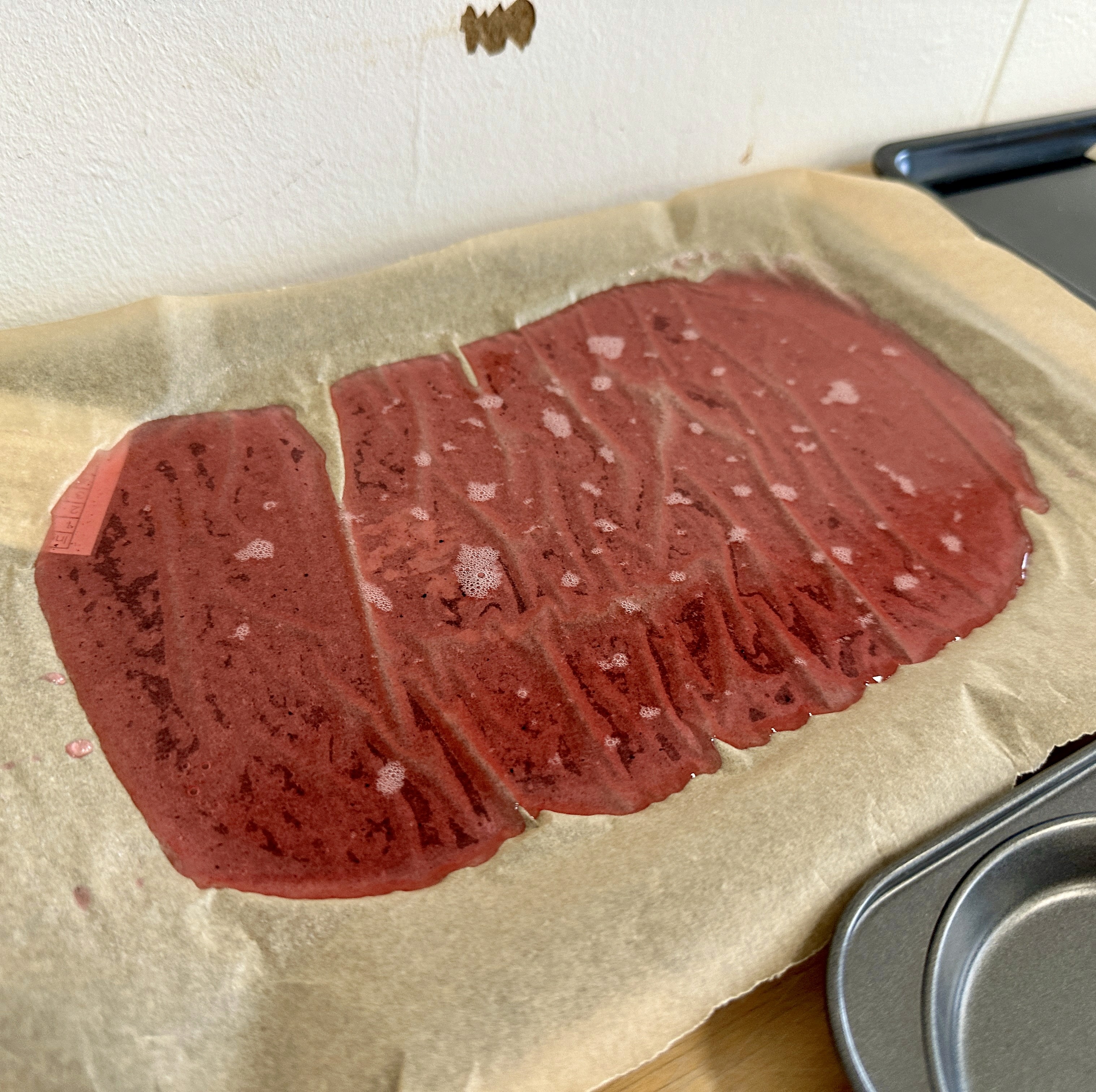
Recipe 02
Pork gelatine + glycerine
Target material: leather substitute
Ingredients
Water — 120ml
Pork gelatine — 24g
Glycerine — 6g
Method
Bloom gelatine in water 10–15 mins. Add glycerine. Heat and stir until thickened — don't boil. Pour flat onto a non-stick tray. Dry in a warm place — may take several days depending on thickness and humidity.


