Organic · Research — project 09
Biomimicry Helmet
A biomimicry-led cycling helmet redesign — studying the frog to rethink how we protect the human head
Product design · Goldsmiths · 2022
ROLE
Solo designer, researcher
METHOD
Biomimicry
OUTPUT
Ideation sketches + form exploration + final concept
REFERENCE
The frog
THE BRIEF
WHAT IS BIOMIMICRY
Nature's creations are studied and imitated — or used as inspiration — for designing processes and products that solve human problems. This is the core principle of biomimicry, and it was the starting point for this project: rather than approaching cycling helmet design from existing helmet conventions, begin with the question "what has already solved this problem in nature?"
The problem being solved is the same one every helmet designer faces: how do you protect a fragile, irregularly shaped object from high-velocity impact while keeping the protective structure light, comfortable, ventilated, and visually considered? Nature has been working on this problem for hundreds of millions of years.
Biomimicry is the design practice of studying biological systems — animals, plants, ecosystems — and translating the principles that make them work into human-made objects and processes. It is distinct from copying: you are not recreating the form of a frog's head, you are understanding why that form works and applying that understanding to a new context.
WHAT WAS STUDIED - IDEATION
Before sketching a single helmet form, I studied the frog's structural properties across four categories relevant to head protection.
INSPIRATION
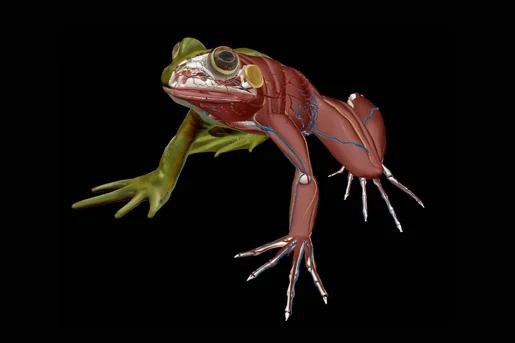
Reference photography and anatomical study of the frog across the four categories.
Some of the most significant engineering breakthroughs of the last century came from biomimicry: Velcro from burr hooks, bullet train noses from kingfisher beaks, aircraft winglets from eagle feathers. The cycling helmet is an underexplored opportunity in this tradition.

THE REFERENCE - THE FROG
The frog was selected as the primary reference because it solves several of the same problems a cycling helmet must solve — simultaneously and elegantly.
A frog's skull is not a solid dome. It is a latticed structure with strategic voids — this distributes the force of impact across a wider area rather than concentrating it at the point of contact. This is precisely the principle behind modern helmet foam, but the frog achieves it through bone geometry rather than material compression.
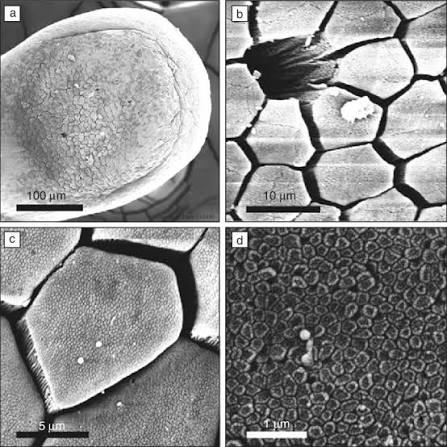
The frog's skin — particularly in arboreal species — has a layered, textured surface that manages both moisture and airflow. Translated to a helmet, this surface logic informs ventilation channel placement and outer shell texture.
The positioning of a frog's eyes — elevated and wide — gives it near-panoramic vision without rotating its head. A helmet designed around this principle would place the visor geometry to maximise peripheral awareness for a cyclist moving through traffic.
Skull geometry - Distributes impact laterally
Skin texture - Absorbs and releases energy
Eye placement - Near-360° field of vision
Surface channels - Manages airflow and moistur


FORM EXPLORATION
The sketching phase translated frog structural principles into cycling helmet form — exploring how the four studied properties could be expressed in a helmet that a cyclist would actually want to wear.


KEY DESIGN DECESIONS
Impact distribution
The frog skull's lattice structure spreads force across multiple load paths simultaneously. A helmet applying this principle would use a multi-layer shell with internal geometric reinforcement rather than uniform foam density.
Peripheral vision
Wide-set, elevated eye placement gives frogs near-360° vision. A helmet designed around this principle would have a visor geometry that extends peripheral sightlines — critical for urban cycling where lateral hazard awareness is essential.
Surface and ventilation
The textured, channelled surface of frog skin manages both moisture and thermal regulation. Applied to a helmet outer shell, this informs a surface pattern that creates passive airflow channels without reducing structural integrity.
Form language
The frog's head has an organic, compressed geometry — wide and low rather than tall and narrow. Translated to a helmet, this suggests a flatter profile that sits closer to the skull, reducing aerodynamic drag and improving stability at speed.
Low, wide profile.Following the frog's compressed skull geometry, the helmet sits closer to the head with a wider lateral spread. This lowers the centre of gravity in an impact, distributing force more evenly across the skull rather than concentrating it at the crown.
Textured outer shell.The exterior surface uses a biomimetic channel pattern derived from frog skin — running front to back to create passive ventilation ducts that cool the head without requiring cut-out voids in the structural shell.
Extended peripheral visor geometry.The visor line curves wider at the temples, extending the cyclist's peripheral field of view to the sides — directly translated from the frog's wide-set eye placement. Lateral awareness in urban cycling is as important as forward vision.
Extended peripheral visor geometry.The visor line curves wider at the temples, extending the cyclist's peripheral field of view to the sides — directly translated from the frog's wide-set eye placement. Lateral awareness in urban cycling is as important as forward vision.
OUTCOME & REFLECTION
The project produced a design concept that departs from conventional cycling helmet language — not for visual differentiation, but because the structural logic demands it. A helmet derived from frog anatomy looks different because it works differently: lower, wider, textured, and with a visor geometry that extends rather than frames the visual field.
The most valuable outcome of the project was methodological rather than formal: starting from a natural reference forced every design decision to be justified by a structural principle rather than convention or aesthetic preference. Biomimicry is not a style — it is a rigour.